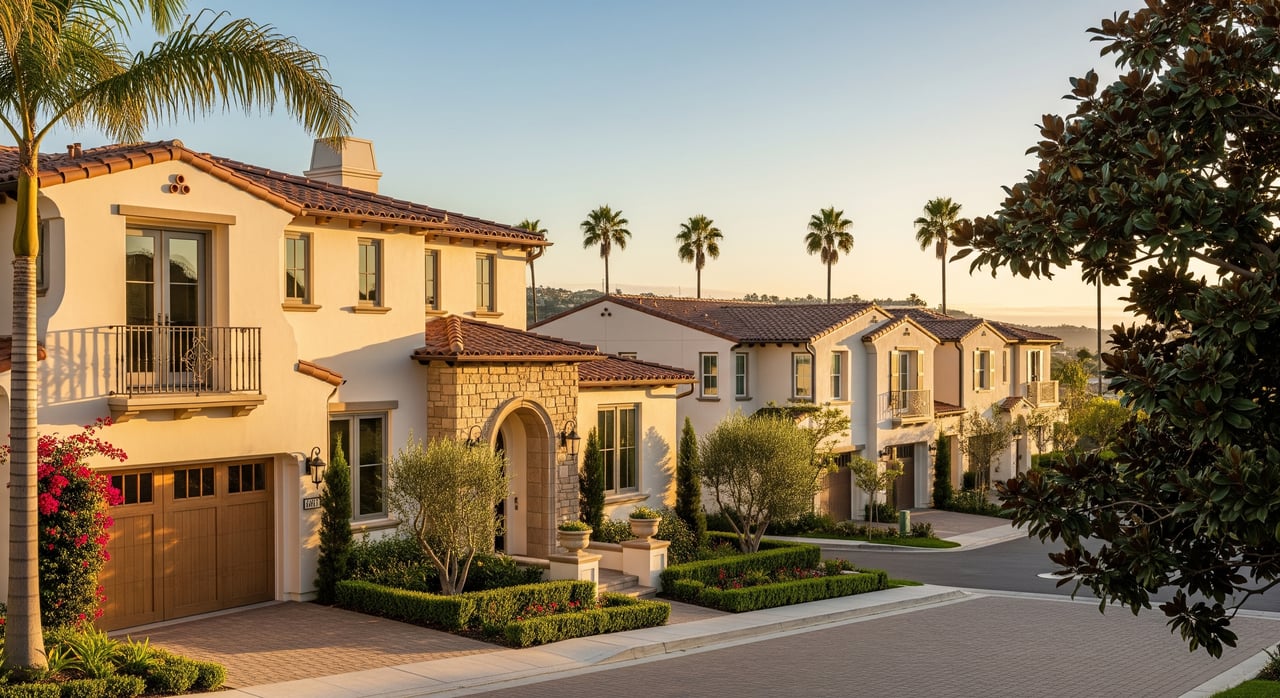
Trying to choose between a townhome or a single-family home in Laguna Niguel? You are not alone. Many buyers in this coastal-adjacent part of Orange County weigh yard space and privacy against low maintenance and HOA support. In this guide, you will learn how the tradeoffs play out locally, how to compare true monthly costs, what HOA documents to review, and how resale trends differ by property type. Let’s dive in.
Laguna Niguel buyers: what’s driving choice
Laguna Niguel blends suburban neighborhoods with attached communities from the 1970s through the 2000s. Many buyers value proximity to beaches, trails, and job centers in the broader Anaheim–Santa Ana–Irvine metro. Your choice often comes down to how you balance space, yard needs, HOA rules, and total carrying costs.
- Single-family homes tend to attract buyers who want lot privacy, room for expansion, and control over the property.
- Townhomes often appeal to rightsizers, first-time move-up buyers, and commuters who value location and lower day-to-day maintenance.
Costs in Orange County terms
Purchase price and comps
Detached single-family homes usually carry higher sale prices than attached townhomes in the same submarket because of lot value and size. That said, price per square foot varies based on location, views, and amenities. The best way to see the gap in a specific Laguna Niguel neighborhood is to compare recent sales with the same bedroom and bathroom count and similar condition.
What to include in monthly carrying costs
Build your budget with all recurring items, not just the mortgage.
- Mortgage principal and interest
- Property taxes (California’s base rate is 1% of assessed value under Prop 13, plus local assessments and any Mello-Roos where applicable)
- Homeowners insurance (HO-3 or HO-5 for single-family; HO-6 for townhomes/condos)
- HOA fee (if attached or in an HOA community)
- Maintenance reserve (see guidelines below)
- Utilities and landscaping
A practical approach is to calculate:
- Monthly carrying cost = Mortgage P&I + Property tax + Insurance + HOA fee (if any) + Monthly maintenance reserve + Utilities
For planning, a rough guideline is 1% to 3% of home value per year for single-family maintenance. For worksheet budgeting, start with 1% annually for single-family and 0.5% annually for townhomes, then adjust for age and condition.
Example worksheet (fill with your numbers)
- Target purchase price (P): $_____
- Down payment (D%): _____%
- Mortgage rate (r) and term (n years): _____% / _____ years
- Annual property tax rate estimate (t%): _____%
- HOA monthly fee (H): $_____
- Monthly utilities (U): $_____
- Insurance estimate (I): $_____
- Maintenance reserve (m% per year): SFR ~1%, Townhome ~0.5% (starting points)
Now estimate:
- Mortgage principal = P × (1 − D%)
- Use an online mortgage calculator for Monthly P&I
- Monthly taxes = (P × t%) / 12
- Monthly maintenance reserve = (P × m%) / 12
- Monthly carrying cost = P&I + taxes + H + I + maintenance reserve + U
Cost risks to flag early
- Special assessments from the HOA (these can be significant and unexpected).
- Deferred maintenance in older complexes that may require re-roofing, re-plumbing, paving, or seismic work.
- Insurance responsibility differences. Townhome owners typically rely on an HOA master policy for the exterior, but still need an HO-6 policy for interior finishes, liability, and loss assessments. Single-family owners insure the entire structure.
HOA rules, insurance, and your responsibilities
What HOAs usually cover
In many attached communities, the HOA manages common areas and sometimes the building exterior and roof. Your responsibilities are defined in the CC&Rs, bylaws, and rules. Some HOAs cover almost all exterior elements. Others do not. Always confirm what is covered before you write your offer.
- Townhome owners typically carry an HO-6 policy to cover interiors, personal property, liability, and gaps or deductibles in the master policy.
- Single-family owners carry an HO-3 or HO-5 policy that covers the entire structure and contents, which usually costs more.
California rules you should know
HOAs in California operate under California’s Davis-Stirling Common Interest Development Act. During escrow, you should receive disclosures such as budgets, reserve studies, insurance certificates, recent meeting minutes, CC&Rs, bylaws, rules, and any litigation disclosures. Review them closely to understand financial health and upcoming projects.
HOA red flags
- Low reserve balances with no plan to fund expected repairs
- Frequent or large special assessments
- Pending or active litigation involving the HOA
- Strict rental caps that shrink the investor buyer pool
- Rules that conflict with your lifestyle (pets, alterations, parking)
- Large insurance deductibles or gaps in the master policy
Maintenance: what you actually handle
Single-family expectations
You handle the entire exterior, landscaping, roof, driveways, fencing, and any pool equipment. Budget for periodic painting, hardscape upkeep, and major systems over time. A general planning rule is 1% to 3% of the home’s value per year, adjusted for age and condition.
Townhome expectations
The HOA often covers exterior maintenance, common landscaping, and sometimes roofs and building envelope. You are typically responsible for interiors and some limited elements. Confirm responsibilities for windows, patios, balconies, and driveways in the maintenance matrix inside the CC&Rs.
Resale dynamics in Laguna Niguel
Appreciation and liquidity
Detached single-family homes in Southern California have historically shown strong appreciation due to the value of land. Attached homes can appreciate as well, but they may lag single-family homes depending on supply and buyer preferences. Liquidity is also different. Single-family homes often draw a broader buyer base, while townhomes can sell quickly in affordability-constrained periods.
Local factors that drive resale
- Neighborhood micro-markets, including proximity to parks, trails, and the coast
- HOA quality and reserve funding (well-run HOAs attract buyers)
- Age and condition of the community, especially if major repairs are due soon
- Parking and storage availability for townhomes
- Rental restrictions that may limit investor interest while supporting owner-occupant focus
Time horizon and exit strategy
If you expect a shorter hold, pay extra attention to potential HOA assessments and liquidity. For a 5 to 10+ year horizon, plan around expected community repairs and upgrades. If you aim to resell to buyers seeking a yard and private outdoor space, a detached home typically keeps broader appeal.
Decision framework for your choice
Use this simple five-step process to stay objective.
- Non-negotiables
- Bedrooms, bathrooms, garage, accessibility
- Yard or private outdoor space needs
- Pet rules and any community restrictions
- Financial constraints
- Maximum purchase price and monthly carrying cost target
- Cash available for down payment and reserves
- Lifestyle priorities (rank 1 to 10)
- Low maintenance vs yard and privacy
- Proximity to work, schools, beaches, and trails
- Desired amenities (pool, gym, clubhouse) and tolerance for rules
- Risk tolerance
- Comfort with HOA fees and potential special assessments
- Willingness to manage exterior maintenance and yard work
- Appetite for interior renovation work
- Time horizon
- Short (<5 years), medium (5–10 years), long (10+ years)
Side-by-side worksheet you can use today
Fill this out for two properties you are considering in Laguna Niguel. Adjust estimates based on age, condition, and community documents.
- Property A (Townhome or SFR): __________
- Property B (Townhome or SFR): __________
Financial inputs
- P (price): $_____
- D% (down payment): _____%
- r (rate) / n (term): _____% / _____ years
- t% (annual property tax rate): _____%
- H (monthly HOA): $_____
- U (monthly utilities): $_____
- I (insurance): $_____
- m% (maintenance): SFR ~1% per year; Townhome ~0.5% per year (starting points)
Outputs
- Monthly P&I: $_____
- Monthly taxes = (P × t%) / 12: $_____
- Monthly maintenance = (P × m%) / 12: $_____
- Monthly carrying cost = P&I + taxes + H + I + maintenance + U: $_____
Qualitative ratings (1 to 10)
- Lifestyle fit: _____
- HOA stability (for attached): _____
- Privacy and outdoor space: _____
- Resale appeal in 5–10 years: _____
Due diligence checklist for Laguna Niguel
For townhomes and condos
- Full HOA packet: budget, reserve study, last 12 months of minutes, CC&Rs, rules, insurance certificate
- List of pending repairs, planned projects, and recent special assessments
- Rental policy and current percentage of rented units (if relevant)
- Any active or pending litigation
- Physical inspection with focus on building envelope, balconies, shared walls, and common plumbing
- Clarify the master policy deductible and owner coverage requirements (HO-6)
For single-family homes
- Home inspection with emphasis on roof, foundation, drainage, grading, and pool equipment (if any)
- Estimates for landscaping, exterior maintenance, and periodic improvements
- Insurance quote for HO-3 or HO-5 policy
For both property types
- Recent comparable sales in the same neighborhood over the last 3 to 6 months
- Property tax assessment details and any Mello-Roos or special taxing districts
- Typical days on market in the community and buyer profiles
- Confirm parking, storage, and any use restrictions
Smart questions to ask the HOA
- What does the master policy cover, and what is the deductible for major losses?
- Are any special assessments pending or under consideration?
- What is the current reserve balance and the percentage funded versus recommendations?
- Are there any active or pending lawsuits?
- What is the rental policy and current percentage of units rented?
- When were major systems last replaced (roofing, plumbing, paving, elevators)?
Choosing your fit in Laguna Niguel
If you want low maintenance and the predictability of HOA-managed exteriors, a townhome can be a strong choice, especially if staying close to the coast or key job centers is your priority. If you want a private yard, control over improvements, and broader resale appeal to buyers who value space, a single-family home often fits better. Your best move is to compare two real properties side by side using the worksheet, then validate the HOA’s financial health or the single-family’s maintenance needs before you write an offer.
For market context and reports on county trends, you can review the California Association of Realtors and National Association of Realtors. For HOA rules and required disclosures in California, see the Davis-Stirling Act.
When you are ready to match the right property to your budget and lifestyle, connect with the experts who know Orange County’s micro-markets and HOA nuances. Reach out to Sadri Group to get a clear plan, vetted comps, and a side-by-side cost breakdown.
FAQs
What are the key cost differences between townhomes and single-family homes in Laguna Niguel?
- Single-family homes usually have higher purchase prices and insurance, plus full exterior and yard upkeep. Townhomes often have lower purchase prices and exterior maintenance handled by the HOA, but you will pay monthly HOA fees and should watch for special assessments.
How do property taxes work in Orange County under Prop 13?
- California’s base property tax rate is 1% of assessed value, plus local assessments and any Mello-Roos. Your effective rate is commonly above 1%. Use the property’s tax bill or county data to estimate your monthly taxes.
What insurance do I need for a townhome in California?
- Most HOAs carry a master policy for common areas and sometimes the building shell. You will typically need an HO-6 policy for interior finishes, personal property, liability, and potential loss assessments. Confirm coverage with the HOA documents.
Which HOA documents should I review before buying a townhome or condo?
- Review the budget, reserve study, last 12 months of meeting minutes, CC&Rs, rules, insurance certificates, planned projects, any special assessments, rental policies, and litigation disclosures. These show financial health and upcoming repair risks.
Do single-family homes generally have better resale in Southern California?
- Detached homes often show strong appreciation due to land value and broad buyer appeal. Attached homes can appreciate too, but may lag depending on supply and preferences. Local micro-markets and condition still drive outcomes.
How much should I budget for maintenance each year?
- As a planning guideline, start around 1% of home value per year for single-family and 0.5% for townhomes, then adjust for age and condition. Some years can be higher due to major systems or exterior projects.